Genetics uncover mechanisms underlying long COVID – research team awarded the 2026 Medix Prize
A breakthrough international study led from Finland has identified the first clear biological explanation for long COVID, a persistent condition affecting hundreds of thousands of people worldwide. The research has been awarded the Minerva Foundation’s 2026 Medix Prize.
Following a coronavirus infection, some patients develop a persistent condition that can last for months or even years, known as long COVID. Symptoms and the clinical picture can vary considerably from one person to another. Common symptoms include debilitating fatigue and exhaustion, brain fog, various types of pain and respiratory problems.
Understanding and diagnosing the condition has been a major challenge for the medical community. An international large-scale study led by Finnish researchers has now provided an important breakthrough, demonstrating that long COVID has a clear biological basis.
The study, published in the prestigious journal Nature Genetics, was led by Hanna M. Ollila, Senior Researcher at the Institute for Molecular Medicine Finland (FIMM) at the University of Helsinki.
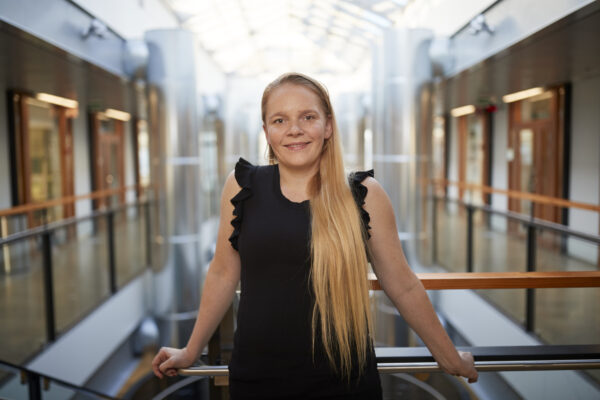
The award-winning study was led by Hanna M. Ollila, Senior Researcher at the Institute for Molecular Medicine Finland (FIMM) at the University of Helsinki.
The lungs may hold a key to understanding long COVID
The researchers analysed genetic data from more than one million people, drawing on the Finnish FinnGen dataset as well as corresponding datasets from 16 other countries. They identified a genetic variant in the FOXP4 gene that acts as an independent risk factor for developing long COVID. Although FOXP4 has also been linked to severe acute COVID-19, the analyses showed that the genetic variant independently contributes to the risk of developing long COVID.
“Our findings show that both having had a coronavirus infection and individual genetic factors contribute to the risk of developing long COVID. The role of the FOXP4 gene points to the importance of lung function and the local immune response in the development of the condition,” says Hanna M. Ollila, head of the research group.
Genetic differences may also help explain why, under similar circumstances, one person recovers quickly while another goes on to develop a long-term illness. For example, around seven per cent of people in Finland carry this particular risk variant, whereas it is considerably less common elsewhere in Europe.
Ollila nevertheless stresses that carrying the risk variant does not mean that a person will develop long COVID:
“An individual gene does not directly determine a person’s risk. Rather, these are subtle differences observed at the population level. The greatest value of genetic information is that it gives us a window into the biological mechanisms underlying disease. It helps us understand what causes diseases and how they may be connected to other conditions.”
Recognition for long COVID patients and interdisciplinary research
The international project led by Ollila brought together data from 24 studies across 16 countries. The project involved close interdisciplinary collaboration with numerous partners at both national and international level, while the overall research effort was closely coordinated and led from Finland.
Ollila is particularly pleased that the prize brings attention to a research topic that is important to her:
“The most important aspect of this recognition is that it raises the profile of long COVID as a disease. Because it is a new and complex condition, recognition at this level also sends an important message to patients: their symptoms are being taken seriously, and researchers around the world are working hard to understand the biological causes of the disease.”
The award-winning study required a tremendous effort and seamless collaboration across an international network. Ollila expresses her gratitude to everyone involved and is pleased that the project demonstrated the power of large-scale interdisciplinary collaboration.
“A single call could involve physicians, cell biologists, statisticians, data analysts and patients. The approach and research framework we developed provide a useful model, and by applying the same platform, we have already expanded our research to other similar post-infectious conditions, such as fibromyalgia and chronic fatigue syndrome,” Ollila says.
Internationally impactful science led from Finland
The Minerva Foundation’s Medix Prize, worth €20,000, is one of Finland’s most significant recognitions in medical research. The prize has been awarded since 1988. The award received by Hanna M. Ollila’s research team highlights the world-class quality of Finnish medical research and biobanks and datasets such as FinnGen, as well as Finland’s ability to lead research with global impact.
The award-winning study was published in the prestigious scientific journal Nature Genetics in early 2025 under the title “Genome-wide association study of long COVID”. The article’s first authors were Vilma Lammi, Tomoko Nakanishi and Samuel E. Jones, while Hugo Zeberg and research group leader Hanna M. Ollila provided senior supervision.